Light Painting Photography

For the promotion and progression of Light Painting Art and Artist.

  • Home
  • Blog
  • History
  • Artists
    • Dean Chamberlain
    • Eric Staller
    • Susan Sims-Hillbrand
    • Vicki DaSilva
    • David Lebe
    • Troy Paiva
    • Bruno Mesrine
    • Chanette Manso
    • Patrick Rochon
    • Aurora Crowley
    • LAPP-PRO
    • JanLeonardo
    • Lightmark
    • Arturo Aguiar
    • Pete Eckert
    • Trevor Williams
    • Michael Bosanko
    • Jason D. Page
    • Nocturne
    • Brian Hart
    • Jeremy Jackson
    • Janne Parviainen
    • Jadikan-LP
    • Dana Maltby
    • Lichtfaktor
    • Dennis Calvert
    • TigTab
    • Hannu Huhtamo
  • Tools
    • Light Painting Brushes Starter Kits Introduction
    • Fiber Optics Light Painting Tools for Photography
  • Tutorials
    • Beginner Light Painting Tutorials
    • Light Painting Tutorials by Artists
    • Light Painting Tool Tutorials
    • Kinetic Light Painting Tutorials
    • Light Painting with Fire Tutorials
    • How To Light Paint A Flower
    • Light Painting Photography Tutorial: The Spiked Orb
    • How To Light Paint a Faberge Orb!
    • No More Orb Feet – Light Erases Darkness
    • The Tinfoil Light Painting Technique
    • How To Light Paint A Ghost
    • Electric Orb Light Painting Tutorial
    • Spirographs and Physiograms Tutorial
    • On Camera Light Source
    • Off Camera Light Source
    • Orb Techniques
    • Steel Wool Tutorial
    • Custom White Balance
    • Omnidirectional Light Cap
    • Gel Holder
    • Simple Orb Tool
    • 4 Ways to Add Color to your Plexiglass Light Painting Brushes
    • Driving Shots at Night
    • Wire Wool Spinning
    • El Wire Tutorial
    • Light Stencils
    • Orbs
    • Dome Tutorial
    • Battery Operated Cathode
    • Light Wheel
    • Double Wheel
    • Fire Wall Tutorial
    • Fire Rain Tutorial
    • Smoke
    • How To Light Paint with the Polaroid One Step +
    • How To Focus In The Dark
    • Light Painting Tutorial The Peacock Technique
    • How To Shoot Defocused Fireworks Tutorial
    • Drone Light Painting Tutorial
    • Light Stencil By Trevor Williams
    • Andrew Whyte Dome Tutorial
    • Light Painting Workshop by Patrick Rochon
    • Rob Turney Refractographs
    • SpiroJib by Johnny Griffin
    • Lens Swap Light Painting Tutorial
    • Camera Rotation Light Painting Tutorial
  • Videos
    • Light Painting Documentaries
      • Jason D. Page Documentary
      • Ball of Light
      • Night Photography: Finding Your Way In The Dark
      • Lightpainted Reality
      • SeeMe | In Focus : Pete Eckert
      • Pete Eckert – Dancing on The Edge of Perception
    • Dean Chamberlain
    • Vicki DaSilva
    • Patrick Rochon
    • Lichtfaktor Light Painting Videos
  • Terms
  • Links
  • Connect With Us!
  • About
You are here: Home / Videos

Seize The Night

August 18, 2011 by Jason D. Page

Will Baltazar sent in the light painting stop animation. This is the first attempt at a light painting animation for this freshman light painter, the results are pretty cool. Will made this piece in his house over the course of a week, check out the interview below.

LPP ∇ Its a cool piece man, I can appreciate the amount of work you put into it.
What camera/equipment did you use?
WB ∇ Thank you soo much! The camera i used was a Canon Digital rebel xsi with an 18-55mm lens. As for the equipment, i used small keychain leds and electronic glowsticks. Very small budget.

LPP ∇ How long did it take to shoot it?
WB ∇ The shooting process was about 30 hours, but i stretched that over the course of a week, since i had to wake up to go to high school each morning. Id set a quota for the amount of shots id want to get done each night, so having a goal helped.

LPP ∇ What did you learn from making the video?
WB ∇ If I learned anything from this video, its patience. Drawing and tweaking and redrawing and cheking pictures hundreds of times is no easy task. I also learned a lof of different ways to use my lights as far as effects i could make with them.

LPP ∇ Are you going to make another one?
WB ∇ I do plan on making another one, some time in the future. The time in between will be spent by taking my light painting to new levels, so that when the next video is born, its quality will surpass this one.

LPP ∇ Did you shoot it alone or with help?
WB ∇ I shot this totally alone. The only “help” i had was the model agreeing to pose throughout such a lengthy process, but the drawings, editing, directing and everything else that went into it was all me.

LPP ∇ What inspired you to make the piece?
WB ∇ My inspiration to make this LP video was kindof testing my creative limits. I wanted a medium that was difficult and flexible enough to where if i did it and did it well, i (and people that watched it) could have a glimpse of just how powerful imagination is. And i also wanted to prove to myself that i could stick to this project and finish it.

LPP ∇ Who is your favorite LP artist?
WB ∇ My favorite LP artist has got to be this guy on Flickr. His username is like {tcb}. In being lp artists, we find ourselves able to look at other pieces and decypher how they managed to execute them, but tcb leaves me clueless, and i find that refreshing.

LPP ∇ How did you discover LP?
WB ∇ I discovered LP through google. When i first got ibto photography, id spend a lot of time googling tutorials, and among them was one for long exposure photography. The examples they posted were of LP. and i went from there.

LPP ∇ What was the first LP video you saw that inspired you to create your own?
WB ∇ The first LP Video i saw that inspired me was called “Light warfare” on Youtube by Freddie Wong. I thought it was so magical and creative itd be a crime for me not to try.

LPP ∇ Any other info you would like to add?
WB ∇ Additional info is just that this was made in my bedroom, at home, with the help of a friend and only about 30$ on materials. It was made when i was 17 (im 18 now). So, if people have a beautiful vision, i dont believe that the lack of professional resources or education is reason to not make it a reality. Anything is possible.

Filed Under: Light Painting Photography, Light Painting Video

New Jadikan-LP Light Painting Video

June 14, 2011 by Jason D. Page

Light painting artist Jadikan-LP teamed up with film maker Olivier Fanchon to put together a pretty awesome light painting piece called “-Behind The Lens-“. Check it out…

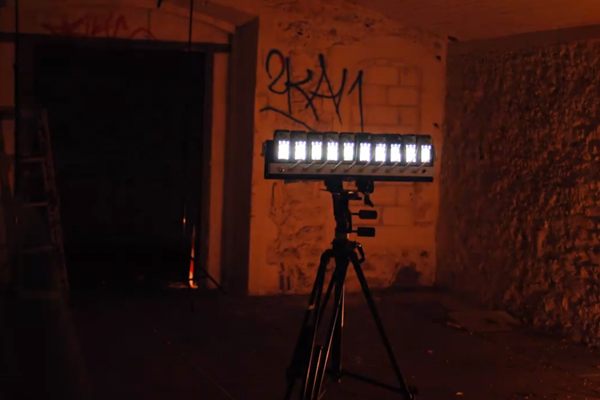
P.S. Can some one please explain the camera set up in the end (image below)….. Guilhem?


Filed Under: Light Painting Video

Rippled- All India Radio

May 5, 2011 by Jason D. Page

Even though it has only been on the great intraweb for about a week you may have already seen this new light painting animation from the creative minds of OH YEAH WOW and ALL INDIA RADIO. “Rippled” has already racked up more than 80,000 views on youtube and that is because of the tireless work that went into the making of and promotion of this awesome piece. Rippled is one of the best light painting animations I have seen in a while so I thought I would ask Darcy Prendergast, one of the minds behind this piece, some questions about the making of this little monster. Check out the video and read the full interview below.

Over 6 months in the making and almost 3 years on from ‘Lucky’ their first light painting collaboration Darcy Prendergast and the creative team at OH YEAH WOW have again paired with the beautiful music of ALL INDIA RADIO to bring you their latest music video, ‘Rippled’. Painstakingly animated frame by frame, the piece is all shot in camera, by real people, in the real world, using long exposure techniques… We hope you enjoy.

All India Radio- The Silent Surf, OUT NOW at:http://itunes.apple.com/us/album/the-silent-surf/id402035973

For more info visit www.allindiaradio.com.au or www.ohyeahwow.com

Darcy Prendergast Interview…

LPP ∇ So Rippled is one of the best light painting animations I have seen in a long time, where did the inspiration and concept come from?
DP ∇ Why thank you! We sure worked damn hard on it to ensure it was right up there…

Well the inspiration came from this god awful German graffiti crew who were ‘tagging’ the sky with light. They’d edited some of their images with an equally awful German Hip Hop track, at like a frame rate of 1FPS. It was more a slideshow really, but it then got me thinking about stitching more images together at a proper frame rate, and soon after the foundations of Lucky were in place.

LPP ∇ What the hell kind of critter is that thing anyway? It sort of looks like an overweight cat that ran into a parked car….
DP ∇ I think you aptly describe him.

LPP ∇ Where did you shoot Rippled?
DP ∇ It was shot in various abandoned warehouses around Melbourne… We wanted to shoot in a somewhat dystopian landscape. There is something so eerily beautiful about these areas, that are surrounded by various hives of activity but have been forgotten about by society itself.

LPP ∇ I saw that it took over 6 months to create, how many nights did you actually shoot this piece?
DP ∇ We weren’t shooting every night, but it wasn’t far from it. I think its the first animated piece I’ve ever done where we did multiple re shoots, planned out camera moves, starting times and things of this nature. After Lucky, we knew we wanted to re visit the medium- but didn’t want to re visit it too soon. We wanted to hone our craft and ensure we were going to push beyond what we thought possible. I guess that is the reason I was so pedantic about it… I knew how good this piece could be if we got it exactly right. That was partly the reason for it taking 6 months to create- that an animation is an inherently slow process.

LPP ∇ How many individual photos did you take?
DP ∇ Over 10,000 I think, not that I counted…

LPP ∇ What was the average exposure time of a single shot?
DP ∇ Thats something you’ve really got to find a balance with, depending on how well lit a scene is. If its a relatively bright shot already, a 10 second exposure would suffice- but might not give you enough time to complete your drawing. On the opposite end of the spectrum, if you have a really dark shot with a 30 second exposure- you may only need 5 to draw the character… and you’re standing around for 25 seconds every frame, which kind of kills the mood. We found that 15-20 seconds worked in most situations, but we steer clear of any street lights and things like that where possible.

LPP ∇ In all those nights there had to be something crazy that happened, would you like to share anything?
DP ∇ Ha! Abandoned factories will definitely serve up some strange encounters… we almost got in a fight with a group of drunks who knocked the camera 3 quarters through a shot. That was fun to line back up again. Ummm but I think the craziest thing we saw though was ‘the naked chromer’. We took all of gear into one of the compounds we were shooting in and here is this guy about 10 metres away, surrounded by spray cans, completely naked, huffing away. We couldn’t help but laugh… but stopped when his head slowly turned (reminiscent of a scene from the exorcist or something) to reveal these
glassy yet evil eyes and a silver mouth. We found a new room to shoot in that night.

LPP ∇ The rippled effects are awesome what are they made of?
DP ∇ Our trusty friend, alfoil. We made a whole bunch of replacement ripples that we lugged around in a big garbage bag every night.

LPP ∇ Did you have the entire animation scripted or did you come up with stuff while on location?
DP ∇ Unlike Lucky, this wasn’t an unplanned ‘have fun with the medium’ kind of approach. We still had fun- we’d still have a few drinks whilst shooting, but we were never stuck for things to shoot. I knew what themes I wanted to play with and whilst its an abstract narrative, there is still very much a narrative involved. Lucky was spontaneous- we would leave the studio as soon as night fell and spend an hour or 2 on set every night just trying to think of what to shoot. There wasn’t much of a direction. Whilst thoroughly planned, Rippled was a visceral formation, we’d still experiment, find new techniques, and chase down things we thought had potential.

LPP ∇ What was the most difficult part of the project?
DP ∇ Motivation is always tough I guess, because you’re out shooting until the sun rises most nights. You’re sleeping patterns are thrown even further out of whack, which was especially hard for the crew- most of which have part time jobs and such. Its tough when you wake up, and its only a couple of hours before you have to go and do it all again. This being said- we all
believed in the project. It was a labour of love, and we knew the result would be worth it if we just saw it through.

LPP ∇ What was the best part of the project?
DP ∇ I think just shooting with my close friends. Under the cover of night, we’d bump all our gear into the warehouses, have a few drinks, play some music, hang out with creative purpose. A project like this wouldn’t be possible without people like them and a team like that…

The way we work is foreign and insane to most, but I wouldn’t have it any other way.

LPP ∇ Thanks for your time awesome work.

Filed Under: Light Painting Photography, Light Painting Video Tagged With: Light Painting Video

Night Photography: Finding Your Way In The Dark

May 4, 2011 by Jason D. Page

I have been meaning to post this awesome night photography/light painting video by Lance Keimig and Scott Martin for some time now but somehow it slipped thru the cracks in my mind…. without further adieu, enjoy.

Night Photography: Finding Your Way In The Dark.

This film documents a Full Moon Night Photography Workshop in the Big Bend region of West Texas led by photographers Scott Martin and Lance Keimig. Scott and Lance teach Night Photography and Light Painting workshops in various locations around the country. Learn more at on-sight.com and thenightskye.com. Learn more about the filmmakers at walleyfilms.com.

Filed Under: Light Painting Video Tagged With: Lance Keimig, Light Painting Video, Scott Martin

Chris Benbow Driving Video Tutorial

April 27, 2011 by Jason D. Page

Light painting artist Chris Benbow has been working on a series of light painting tutorial videos. Here is the first in the series.

Chris was also kind enough to supply the readers of LightPaintingPhotography.com with all of his detailed camera and rigging information. Thanks Chris.

Camera: Canon EOS 5Dmkii
Lens: Sigma 15mm Fisheye
Shutter Release: Hähnel Wired Release
Suction Cup: Manfrotto 241FB Suction Cup With Flat Base
Tripod Head: Manfrotto 804RC2

Camera Settings
ISO: 100
Aperture: F/5.6
Shutter Speed: 10 Seconds on continuous mode

Filed Under: Light Painting Video Tagged With: Chris Benbow, Light Painting Tutorial, light painting vide

« Previous Page
Next Page »

Copyright © 2026 · News Pro Theme on Genesis Framework · WordPress · Log in