Light Painting Photography

For the promotion and progression of Light Painting Art and Artist.

  • Home
  • Blog
  • History
  • Artists
    • Dean Chamberlain
    • Eric Staller
    • Susan Sims-Hillbrand
    • Vicki DaSilva
    • David Lebe
    • Troy Paiva
    • Bruno Mesrine
    • Chanette Manso
    • Patrick Rochon
    • Aurora Crowley
    • LAPP-PRO
    • JanLeonardo
    • Lightmark
    • Arturo Aguiar
    • Pete Eckert
    • Trevor Williams
    • Michael Bosanko
    • Jason D. Page
    • Nocturne
    • Brian Hart
    • Jeremy Jackson
    • Janne Parviainen
    • Jadikan-LP
    • Dana Maltby
    • Lichtfaktor
    • Dennis Calvert
    • TigTab
    • Hannu Huhtamo
  • Tools
    • Light Painting Brushes Starter Kits Introduction
    • Fiber Optics Light Painting Tools for Photography
  • Tutorials
    • Beginner Light Painting Tutorials
    • Light Painting Tutorials by Artists
    • Light Painting Tool Tutorials
    • Kinetic Light Painting Tutorials
    • Light Painting with Fire Tutorials
    • How To Light Paint A Flower
    • Light Painting Photography Tutorial: The Spiked Orb
    • How To Light Paint a Faberge Orb!
    • No More Orb Feet – Light Erases Darkness
    • The Tinfoil Light Painting Technique
    • How To Light Paint A Ghost
    • Electric Orb Light Painting Tutorial
    • Spirographs and Physiograms Tutorial
    • On Camera Light Source
    • Off Camera Light Source
    • Orb Techniques
    • Steel Wool Tutorial
    • Custom White Balance
    • Omnidirectional Light Cap
    • Gel Holder
    • Simple Orb Tool
    • 4 Ways to Add Color to your Plexiglass Light Painting Brushes
    • Driving Shots at Night
    • Wire Wool Spinning
    • El Wire Tutorial
    • Light Stencils
    • Orbs
    • Dome Tutorial
    • Battery Operated Cathode
    • Light Wheel
    • Double Wheel
    • Fire Wall Tutorial
    • Fire Rain Tutorial
    • Smoke
    • How To Light Paint with the Polaroid One Step +
    • How To Focus In The Dark
    • Light Painting Tutorial The Peacock Technique
    • How To Shoot Defocused Fireworks Tutorial
    • Drone Light Painting Tutorial
    • Light Stencil By Trevor Williams
    • Andrew Whyte Dome Tutorial
    • Light Painting Workshop by Patrick Rochon
    • Rob Turney Refractographs
    • SpiroJib by Johnny Griffin
    • Lens Swap Light Painting Tutorial
    • Camera Rotation Light Painting Tutorial
  • Videos
    • Light Painting Documentaries
      • Jason D. Page Documentary
      • Ball of Light
      • Night Photography: Finding Your Way In The Dark
      • Lightpainted Reality
      • SeeMe | In Focus : Pete Eckert
      • Pete Eckert – Dancing on The Edge of Perception
    • Dean Chamberlain
    • Vicki DaSilva
    • Patrick Rochon
    • Lichtfaktor Light Painting Videos
  • Terms
  • Links
  • Connect With Us!
  • About
You are here: Home / Blog

“Making Good Time” the Light Painting Photography of Mike Mandel

May 5, 2014 by Jason D. Page

Mike-Mandel-Making-Good-Time
Lance Keimig and I have been talking a good bit about the history of light painting over the last few months in preparation for Lance’s new book. During one of our discussions Lance brought up Mike Mandel and his own book “Making Good Time”. I said HUH?!? I had never heard of this, I am as big a light painting history nerd as your gonna find so immediately I ordered it online and when I opened it up for the first time I was absolutely blown away. Not only were there stunning and historical light painting images that I had never seen before but there is also a significant amount of research that Mike had compiled about the history of early light painting photography pioneers Marey, Gilbreth, and a few others that you should read about when you order “Making Good Time”.

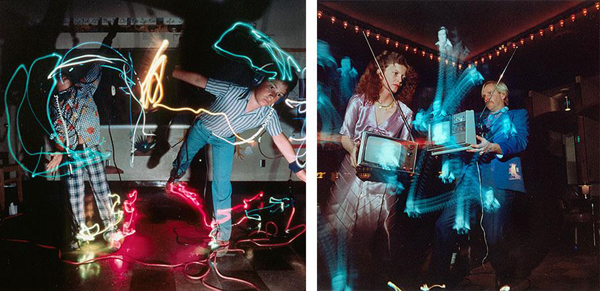
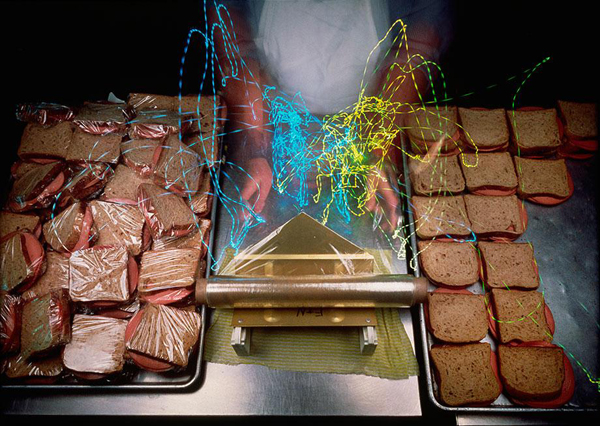
Mike Mandel’s light painting photography work is an extension of the Work Simplification studies, or Chroncyclegraphs, of Frank and Lillian Gilbreth but “They were made as a satire, examining daily life tasks that didn’t need to be analyzed for efficiency’s sake”. Check out some of these awesome images below, read the short interview I did with Mike, and most importantly add this incredible book to your collection.
LPP ∇ Mike thank you very much for taking the time to answer a few questions. Can you tell me a little about yourself, your background, and specifically how did you get involved with photography?

MM ∇ I became interested in photography in the early 70s when a lot of people of my generation were looking for something more meaningful and creative to devote themselves to. I got a MFA from the San Francisco Art Institute in 1974 where I met Larry Sultan. He and I collaborated on numerous projects over the next 27 years including an important photographic book Evidence that we self-published in 1977.

LPP ∇ Your light drawing work was heavily influenced by the Gilbreth’s can you talk a little about that? What was the image that created that initial spark for you to seat creating your light drawings and how did you happen upon it?

MM ∇ Before I discovered the Gilbreths I happened upon a 1950s high school textbook pair of images of a woman wearing lights on her wrists. The images depicted a long time exposure in very low light of the woman making dinner from scratch ingredients, and the other making dinner from frozen ingredients. The light patterns from frozen were obviously less, thus “proving” that frozen food preparation was “scientifically” more efficient. The whole idea seemed so amazingly insane that I needed to find out if there was a history to this “time-motion” photography.
Hazel-T.-Craig-Thresholds-to-Adult-Living
In my research I came upon Frank and Lillian Gilbreth who were using this photographic technique to create their “chronocyclegraphs.” Just past the turn of the 20th century when work in the factory was just beginning to be studied and rationalized, people like the Gilbreths and Frederick Winslow Taylor were trying to figure out how to make people more efficient in their work methods. Photography was employed in this manner to teach people “the one best way” to accomplish a work method.

LPP ∇ Let me backtrack a minute how do you classify your light drawing images? Do you call them light drawings or something else.

MM ∇ My images were directly in response to the Gilbreth’s Chroncyclegraphs. They were made as a satire, examining daily life tasks that didn’t need to be analyzed for efficiency’s sake, but were made to suggest that this emphasis on efficiency was a kind of sickness in our faith in science and technology to provide a framework for how we envision our lives.

LPP ∇ I know that your childhood travels with your father also had a heavy influence on your work and specifically the title of your book “Making Good Time”. Do you feel those early years helped steer your work with light in the direction it took?

MM ∇ “Efficiency” is a value that was certainly imbued in my parents’ generation. When the family got in the car to visit my grandmother who lived in Los Angeles (we lived in the suburbs of the San Fernando Valley) my father would always be proud to say that we were “making good time” when there was no traffic on the Hollywood Freeway. This idea of “making good time” stuck with me, and as I evolved into an adult it seemed like a value that symbolized so much that was wrong with society. Efficiency was the last thing on my list. I wanted a life that had meaning and that could provide answers to larger questions.

LPP ∇ Did your work with light always revolve around time and efficiency or did you ever travel down another path?

MM ∇ This was a specific project. It took me about ten years to figure out exactly what I was up to. I guess I wasn’t too efficient about it, but that was just fine. My son was born somewhere in the middle of this, and of course that helped to stretch out the work. But the longer you work on idea, the clearer everything becomes in the end.

LPP ∇ What was the first light drawing you created?

MM ∇ I don’t know about the first, but one of the early memorable ones was when I had yet to work out the technology and was using a motorcycle battery with bulbs attached to wires. My wife wore the battery in a backpack and had the wires strung through her clothing. We took this to a club and she was dancing with the lights, which was pretty beautiful, until the wires short circuited and I had to quickly disengage the batter before she became burned. That was scary and led me to work with a friend who figure out how to re-configure those little bicycle lights that blink. He figured out how to make the lamps blink at a much faster rate, about 20 times/second, which came close to what the Gilbreths were doing. The faster the motion the longer distance between blinks, the lower, the closer. This is how the Gilbreths could identify when people speeded up or slowed down in their work method. And it was just what I needed to make a direct comment about their work.

LPP ∇ Which light drawing image was the most difficult?

MM ∇ Emptying the Fridge. There’s the drawing of light with the small units I just described, but there’s also additional light that I would shine from a flood lamp to create the illusions I was looking for. This was quite a challenge, and thankfully I had a polaroid back for my 4 x 5 camera that helped me figure out how it was working. I was shooting 4 x 5 transparency film, so there was little room for error in exposure.
Mike Mandel Light Painting Photography 2

LPP ∇ What inspired you to start working with robotics?

MM ∇ The robot seemed to be the logical extension of what the Gilbreth’s were up to: taking the repeatable motions and making them as efficient as could be, which the robot does very well.


LPP ∇ What was the most interesting thing that you learned from creating your light drawings?

MM ∇ I learned how the artists of the time (during the early part of the twentieth century) were using light and especially motion as symbols of the new technologies that were being invented to speed up everyday life from work to the mundane activities of housework. And at the same time social engineers like the Gilbreths were using similar visual strategies to actually change how people worked and lived. Standing apart from this history a few generations later I learned how to see these images in a way that only one could see after mechanization took command and changed human behavior so dramatically, not necessarily to the good.

LPP ∇ Do you still create and light drawings or is that a chapter of your life that has been closed?

MM ∇ This was a project that last quite a while. When it was done, it was done.

LPP ∇ One final question, Do you follow the current light painting movement and if so what do you think about the evolution of the art form?

MM ∇ Sorry to say, I’m not following this movement, so can’t really comment. But of course I wish everyone who is committed to their work and ideas, great success and enjoyment.

LPP ∇ Thank you again for taking the time to answer some question, for your inspiring work, and for the early LP history that you included in your book it really is a gift to the community.

To see what Mike is up to now check out his Flickr page HERE or to get a MINT signed version of “Making Good Time” for 50 bucks +5 bucks for shipping email him at mike@thecorner.net. 

Filed Under: Light Painting Photography

NVA Speed Of Light

April 17, 2014 by Jason D. Page

NVA-Speed-of-Light-5


Here is a mind blowing project that every light painter should know about! If you are a light painter, specifically in the UK, you should not miss this opportunity!

NVA Speed of Light is a public art project based on the interaction of movement, light and sound over specific terrain. Basically its every light painters dream scenario. A bunch of choreograph athletes in illuminate LED light suits, running, biking, and dancing about in public spaces. NVA does all the hard work by organizing the event and providing the light gear for the participants. All you have to do is bring your camera and shoot it!

The possibilities for light painting photographers at these events are incredible. The next event is called Ghost Peloton where illuminated cyclist will ride through the night! Ghost Peloton will take place in Waides Yard, Central Leeds UK on May 16-17 2014! Check out the video trailer below and Click HERE to learn more.

Filed Under: Light Painting Photography

University of Richmond Light Painting Workshop

April 10, 2014 by Jason D. Page

University-of-Richmond-Light-Painting-Workshop-1


Recently University of Richmond senior, photography club president, and avid light painter Laura DelPrato decided to introduce her fellow photographers to the world of light painting by holding a workshop with two radical light painting artists Jeremy Jackson, a.k.a Tacky Shack and Aaron Bauer, a.k.a. Dr. Tongs! The workshop turned out to be a great success with over 50 participants, hundreds of new light paintings being created, and no doubt a few new light addicts being born. I caught up with Laura to see what was behind this workshop and as you will read her motivation, light painting aspirations, and personal achievements are pretty damn inspiring.

LPP ∇ So Ms. Laura Congratulations on a super successful light painting workshop tell me a little about yourself. What do you do at the University of Richmond, are you a student, teacher, or something else?

LD ∇ Thank you Jason! The workshop was so much fun! I am currently a senior at the University of Richmond (UR). I will graduate in May with a double major in Leadership Studies and French, and a minor in Physics. I am also President of the UR Photography Club and a kickboxing instructor and fitness assistant at our university wellness center.

LPP ∇ How long have you been light painting and how did you get started?

LD ∇ I have been light painting since I learned about it as a night photography technique in my photography class during my Sophomore year of high school. That makes it about 6 years. I learned on film and fell in love with the light painting process. In the best image from my first roll of light painting film, I dressed up as Cinderella and had my mom and brother create a light spiral around me with a flashlight. I was fascinated by the magical possibilities so I continued to light paint after that whenever I could!

LPP ∇ What was your inspiration to bring a light painting workshop to the University of Richmond?

LD ∇ I wanted to bring a light painting workshop and presentation to the University of Richmond to share the magic of light painting with everyone in the UR and Richmond community. Ever since the formation of the Light Painting World Alliance (LPWA), I have been trying to figure out ways I can contribute to the promotion of the art form and I decided that my best approach was to use the resources I have as a college student. I decided to write a thesis that introduces light painting to the academic world and the workshop was a practical component to supplement my written material. I had initially wanted to host an exhibition in one of the campus museums but they were already booked a few years out.

LPP ∇ Who was involved?

LD ∇ Initially, it was just me working on organizing the workshop with direction from my thesis adviser, Dr. Kristin Bezio and support from Maja White, my former stage lighting professor. Maja was the one who encouraged me to try to organize an exhibition and Dr. Bezio helped me transform my light painting passion into a thesis project. Later, I gained support from Jeremy Jackson, Aaron Bauer, and UR Photo Club. We were honored to receive funding for the event from the UR Cultural Affairs Committee. I would also like to give a shoutout to our DJ Nick Yeutter, “Yites”, who is also a student at UR.

LPP ∇ How did you select Jeremy and Aaron as the artist for the workshop?

LD ∇ I went to the Light Painting World Alliance website and looked for light painters in Virginia. I saw Jeremy and recognized him from Flickr, so I sent him an email asking if he would be interested in bringing light painting to the UR campus. Jeremy was very enthusiastic and said he was willing to help in any way he could! Aaron was actually a surprise! Jeremy mentioned that he had an associate, but I didn’t realize his associate was an established light painter! I found out as we were getting close to the event so I didn’t have the ability to change the flyers. However it was a pleasant surprise for everyone at the presentation and workshop.

LPP ∇ How many people were at the workshop?

LD ∇ There were about 40 to 50 people at the workshop and there were around 60 people at the presentation.

LPP ∇ How long was the workshop?

LD ∇ The workshop was two hours long.

LPP ∇ What was the most difficult part of organizing the workshop?

LD ∇ This was my first time organizing an event, so most of the process was challenging! It was particularly difficult to find a dark spot on campus. Luckily, the university electricians were very helpful and agreed to turn off lights for the workshop part. As for the presentation, we had to deal with some ambient light from exit signs but it turned out okay!

LPP ∇ What was the best part?

LD ∇ The best part of organizing the light painting workshop and presentation was the ability to meet so many new people and share the magic of light painting with them. I loved seeing the expression on their faces when they realized their ability to create really neat images. It feels great to be part of such an engaging and interactive event!

LPP ∇ What was the general reaction of the Participants? Did they get it right away or was there a learning curve?

LD ∇ From what I observed, the participants had a great time! Most of them understood light painting concepts right away, and were eager to try out the light tools! If they did not understand something during the presentation, they weren’t afraid to ask questions, which is great. I think they learned a lot more that way! It seems that a lot of them are interested in learning about how to create light painting tools so that is something to keep in mind for the future.

LPP ∇ Anything wild happen that you would like to share?

LD ∇ Well, as my UR Photo Club members would say, we are officially in a light painting with two “ghosts” 😀

LPP ∇ Do you plan to do anymore?

LD ∇ I would love to do more! I think it is a great team building experience that allows you to develop new skills while having fun. Hopefully UR Photo Club will host another workshop next year and will invite all three (Jeremy, Aaron, and me) of us back! My dream is that eventually light painting will be taught at the college level so I see this as the first step to introducing it to the academic world.

Inspired by the success of this event Jeremy and Aaron have decided to have more Interactive Light Painting Events you can follow them on Facebook HERE, Flickr HERE, and Twitter HERE.

ON A SIDE NOTE AARON GOT RIPPED OFF AND LOST ALL HIS GEAR AN HOUR AFTER HIS FLIGHT LANDED BACK HOME AND COULD USE SOME HELP CLICK HERE TO FIND OUT MORE.

Here is a cool video of the event produced by Stephen Blue:

Filed Under: Light Painting Photography

Light Painter Aaron Bauer Needs Some Help!

April 9, 2014 by Jason D. Page

Aaron-Bauer-Light-Painting

Light painting photographer Aaron Bauer, a.k.a. DrTongs, had just got back from a successful and inspiring light painting workshop at the University of Richmond with long time friend Jeremy Jackson, a.k.a. Tacky Shack, when his (and our) worst photographic nightmare came true.

Click here to head over to the fund http://www.gofundme.com/86nnp8

Here’s what happened:

Aaron’s friend picked him up from the airport, he put all his gear in the trunk of the car and they stopped to grab a quick bite to eat. They were in the restaurant for 20 minutes, when they got back to the car Aaron’s heart sunk as he realized the car had been broken into.  ALL his gear had been stolen! And when I say all his gear I mean everything he had. Aaron’s brand new Canon 5DMkIII with a Canon 24-105 L lens, Canon 50mm 1.4 lens, GoPro H3, Apple Macbook Pro, IPad, SD cards, batteries, shutter releases, flashlights, and the camera bag. I am sure that you have the same sick feeling that I had when I first heard this story, the good news is that Jeremy Jackson has started a Fund drive to help Aaron get a jump start on getting some new gear. We are a light painting family, Aaron and Jeremy were just starting out on a new Light Painting Endeavor to produce educational workshops and share light painting with an ever growing audience. I ask that if you can please spread some love and give 5, 10, 50, or 500 bucks to the fund. In the words of Tacky “Light painting photography is more than a hobby to Aaron, it’s his life.”  Together we can help Aaron get his life back on track.

Click here to head over to the fund http://www.gofundme.com/86nnp8

Filed Under: Light Painting Photography

March 2014 Light Painting Contest Entries

March 22, 2014 by Jason D. Page

Here are the entries for the March 2014 light painting photography contest. Everyone PLEASE VOTE in the comments section of this page to pick your top 3 images, the images all have a number in the title (EXAMPLE… IF ONE OF YOUR FAVORITES IS THE IMAGE TITLED “March 2014 Light Painting Contest 07″ THEN YOU SHOULD PUT THE NUMBER 7 AS ONE OF YOUR CHOICES). Please remember that the theme of this contest was to create a single line light painting, as you will see from the entries there are a few different interpretations of a single line so if the image creator had a solid explanation of how they created the image with one line then it was accepted for the contest.
Voters that do not include 3 unique choices in their post will not be counted. In other words no 1,1,1, or 5,5,5, or 9,9,9…..Please pick your three favorite IMAGES based on the image alone. Vote away!


The light painting photography contest series is sponsored by the best damn companies on earth COAST Flashlights, Neon Flexible, and LED Flexible! Please support these awesome companies that support our light painting art from, without them this contest series would not be possible!

March 2014 Light Painting Contest

Filed Under: Light Painting Contest, Light Painting Photography

« Previous Page
Next Page »

Copyright © 2026 · News Pro Theme on Genesis Framework · WordPress · Log in